Nora Nahhas Built Stars by Nora to Guide Parents and Teachers
The Montessori-trained consultant turned an Instagram page into a platform for gentle parenting, screen-time plans and classroom coaching.
Karim El-Sayed Karim El-Sayed covers company news, policy and regulation across the UAE and wider MENA for Anecdoted, with a focus on how new rules and licences reshape how startups operate. karim@anecdoted.com
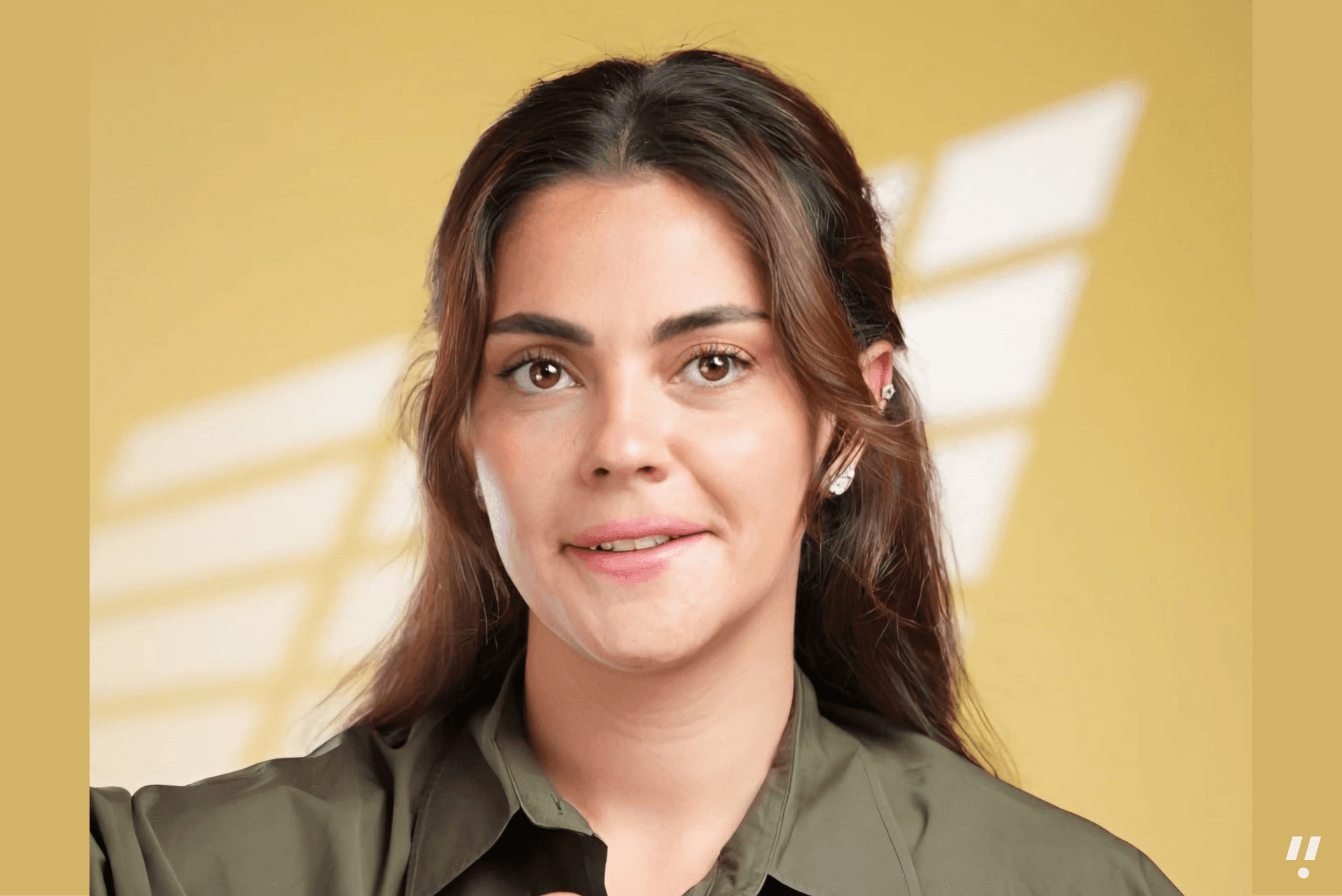
Nora Nahhas works as a behavioral and educational consultant for children and families, and Stars by Nora, the platform she runs, began with something she noticed at home. Watching how her daughter Anna's friends spoke to their parents and to each other left her dissatisfied, both with the behavior and with the parenting styles behind it. One small detail stuck with her: Anna called her "Mama," while friends addressed their mothers by first name, which she considered pedagogically wrong. She decided to do something for mothers carrying the pressure of raising children, and set out to train in the Montessori method.
That took a year and a half. She earned a Montessori diploma in Jordan through the American University, then qualified as an internationally accredited trainer through the American Montessori Center. Education was not her first career. She had finished a degree in architecture and spent several years as a freelance architect before taking a second degree, a bachelor's in Early Childhood Education from Damascus University, at her late mother's urging.
With the qualifications in hand, she needed somewhere to put them to use. Her husband suggested she become a content creator, making educational and parenting material for mothers and teachers. Stars by Nora followed. She launched an Instagram page, picking the platform for its reach, with the intention of publishing useful education rather than entertainment, covering behavioral consultations and coaching teachers on Montessori materials.
Among the ideas she pushes hardest is gentle, positive parenting, starting with the vocabulary. She rejects the term "behavior modification" as offensive to the child. Every child, in her account, has a distinct personality and a particular set of abilities, and guidance should follow those rather than external expectations. Comparing a child with others, reprimanding them in front of anyone but their parents, demanding more than they can manage physically or mentally, and failing to acknowledge even small achievements all do damage. Teachers repeat the same error when they reject a correct answer because the working differs from their own. A child who reaches the right result by an unfamiliar route is thinking independently. Scolding is worse still, particularly in front of peers: it erodes confidence, breeds shyness, leaves children exposed to bullying and can convince them they are failures.
Figures she cites point the same way. A 2026 gentle parenting statistics report from Gitnux found that 68% of children raised this way show lower cortisol levels, a marker of reduced stress, while parental burnout falls by 39%. Other research has found that 65% of children whose parents listen actively have higher self-esteem by age 10, and that positive reinforcement is linked to 20% better academic performance by the third grade.
Trust is the foundation of the whole stage, she argues, and it has to be earned through dialogue. Where it is missing, children go looking for validation elsewhere, in bad company or online, wanting to feel valued rather than sidelined. Affection and a sense of security sit at the center of the relationship between parents, children and teachers, and that bond is what keeps unsuitable influences at a distance.
Screens are the harder problem. The World Health Organization advises against any screen exposure for children under three, a guideline Nahhas says is widely ignored, particularly in Arab societies. Excessive screen time holds back a child's intelligence, and breaking the attachment is exhausting for parents. Her approach is a plan tailored to each child, generally gradual: daily screen time comes down in half-hour steps, and the reduction can be paused if a child digs in. Chores, reading or sleep fill the gap, and parents raise the quality of the time they spend with their children, talking through the day, discussing work pressures or asking a child how they would handle a situation. Browsing the internet together for a topic of interest is another route. Treating a child's opinions as important is part of the answer.
She has applied the same methods at home with Anna, working to understand her personality rather than expecting obedience, encouraging her to voice opinions within the bounds of politeness and household rules kept firm but open to discussion. Sharing her own daily difficulties with followers is what makes the guidance credible, she says, and credibility is the most important element in building a business. Information is freely available now; the open question is whether it is accurate and whether it serves the child and the family.
Her ambition for the brand is to make it a reference point for mothers, fathers and teachers, and to establish specialized Montessori centers in the Middle East, whether online or as physical locations. Every child, she says, is a unique star with a personality worth protecting. Architecture still shapes how she describes the work. It taught her discipline, attention to foundations and the principle that a building's exterior must harmonize with its interior, which maps onto upbringing. She credits her late mother with steering her toward education in the first place and dedicates her success to her memory, treating each child she works with as her own, much as she once treated a design as her own creation before it belonged to a client.

