Syria to Rejoin IMF Arab Group on November 1 as Reconstruction Push Widens
The shift from the Russian Federation constituency ends 14 years outside the Arab bloc and opens the way to technical help, not new money.
Tariq Benali Tariq Benali covers business and corporate news across the UAE and MENA for Anecdoted, tracking the deals, leadership moves and regulatory shifts behind the region's companies. tariq@anecdoted.com
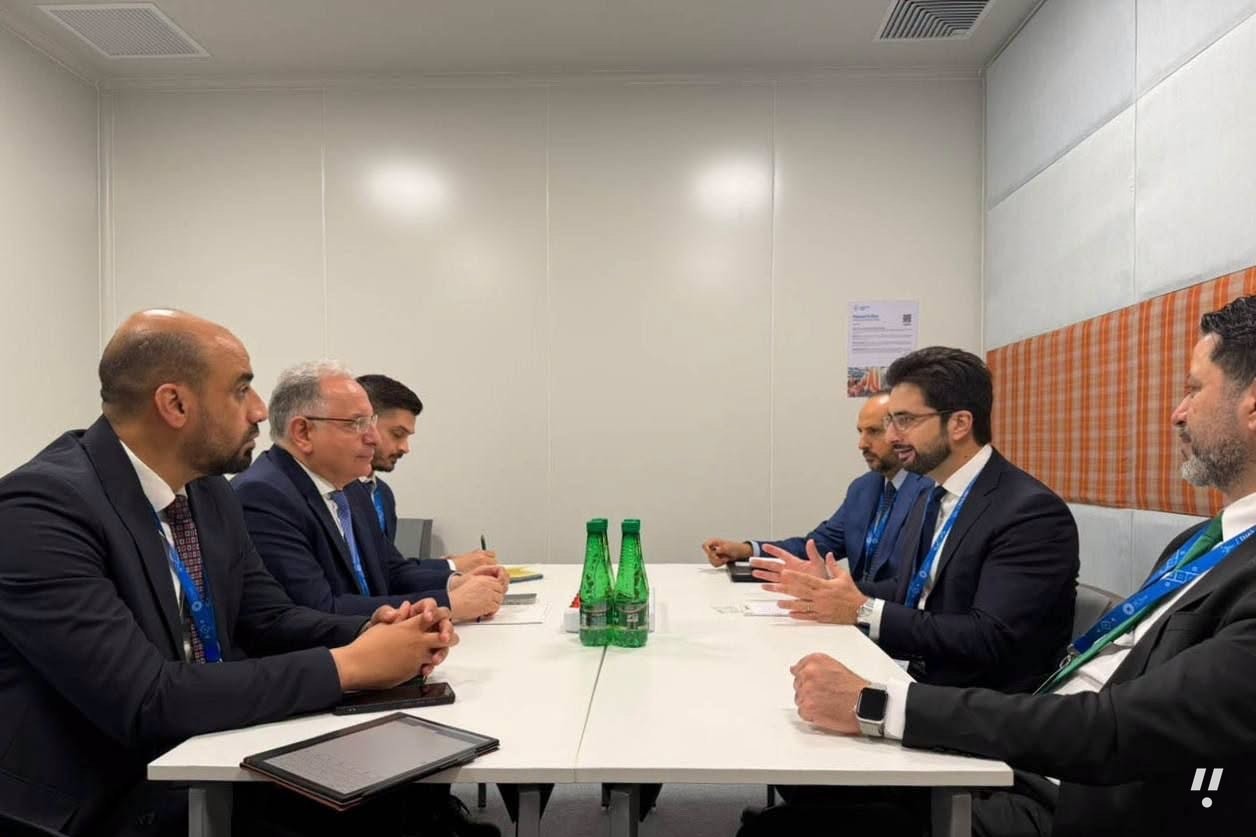
Syria will rejoin the International Monetary Fund's Arab constituency on November 1, ending a 14-year absence and leaving the Russian Federation group it joined in 2012.
The Syrian Finance Ministry announced the shift on Wednesday. It followed a meeting between Finance Minister Mohammed Yasser Barnieh and Central Bank Governor Mohammed Safwat Raslan and Ali Al-Hosni, executive director of the IMF's Arab group, on the sidelines of the IMF and World Bank annual meetings in Bangkok. The three discussed technical assistance, capacity building for Syrian institutions, and groundwork for an Article IV consultation, the fund's regular examination of a member country's economy and policies.
What the decision does and does not do
Syria is not rejoining the IMF. It has remained a member throughout. No new financing has been arranged either. The change alters which group of member states is represented alongside Syria at the fund, aligning it more closely with Arab economies and with the executive director who speaks for that constituency.
Participation in the Arab group was suspended in 2012, when the civil war began.
For Damascus, the practical value lies in coordination. Working through a regional constituency gives Syrian officials a channel for restoring economic data systems, strengthening central bank operations and improving public financial management.
An Article IV consultation assesses a country's economy and policies through meetings with its officials. Its findings map out vulnerabilities and set reform priorities. IMF records show Syria has not completed a published consultation since 2010. Since then the fund has expanded its contact with Damascus through staff visits and technical assistance, as the country tries to rebuild institutions worn down by years of war.
Earlier on Wednesday, Barnieh and Raslan met Catriona Burfield, who heads the IMF's Capacity Development Institute, to discuss training and other support for Syrian institutions.
In August 2026 the IMF said Syria's recovery was strengthening and projected double-digit growth for 2026, helped by gains in agriculture, energy production, electricity supply, trade and services.
How Syria got here
- December 2024: Bashar al-Assad was ousted, opening a political transition and raising expectations for reconstruction and the return of displaced Syrians.
- May 2025: Syria sought large infrastructure investment, including agreements for gas-fired and solar plants with planned capacity totalling 5,000 megawatts.
- November 2025: The IMF deepened its engagement with Syrian authorities, concentrating on economic statistics, the central bank and fiscal management. The fund said more than one million refugees had returned by then.
- Late 2025 into 2026: Sanctions relief and renewed diplomacy widened efforts to draw foreign businesses. Talks with the US covered regional security and diplomatic ties, alongside attempts to bring international companies into the market.
- July 2026: Reconstruction partnerships with foreign firms continued, including French companies, with broader energy options and international cooperation under review.
- August 2026: The IMF said momentum was building and forecast double-digit growth, while stressing institutional rebuilding and technical help.
- October 2026: Barnieh met UK Minister of State for International Development Kirsty McNeill at the IMF-World Bank meetings. They discussed technical assistance, knowledge transfer and capacity building, support for a multi-donor fund, reconnecting British banks with Syria and arranging meetings between financial institutions from both countries, plus cooperation between the Syrian Finance Ministry and the UK Treasury.
The Arab group seat takes effect on November 1.

