The Corporate Credit Cards Leading the UAE Market in 2026
Five platforms are reshaping corporate card management for UAE SMEs as e-invoicing and tax rules tighten.
Nadia Mansour Nadia Mansour covers fintech across the UAE and MENA for Anecdoted -- digital banking, payments licences and the startups building around them. nadia@anecdoted.com
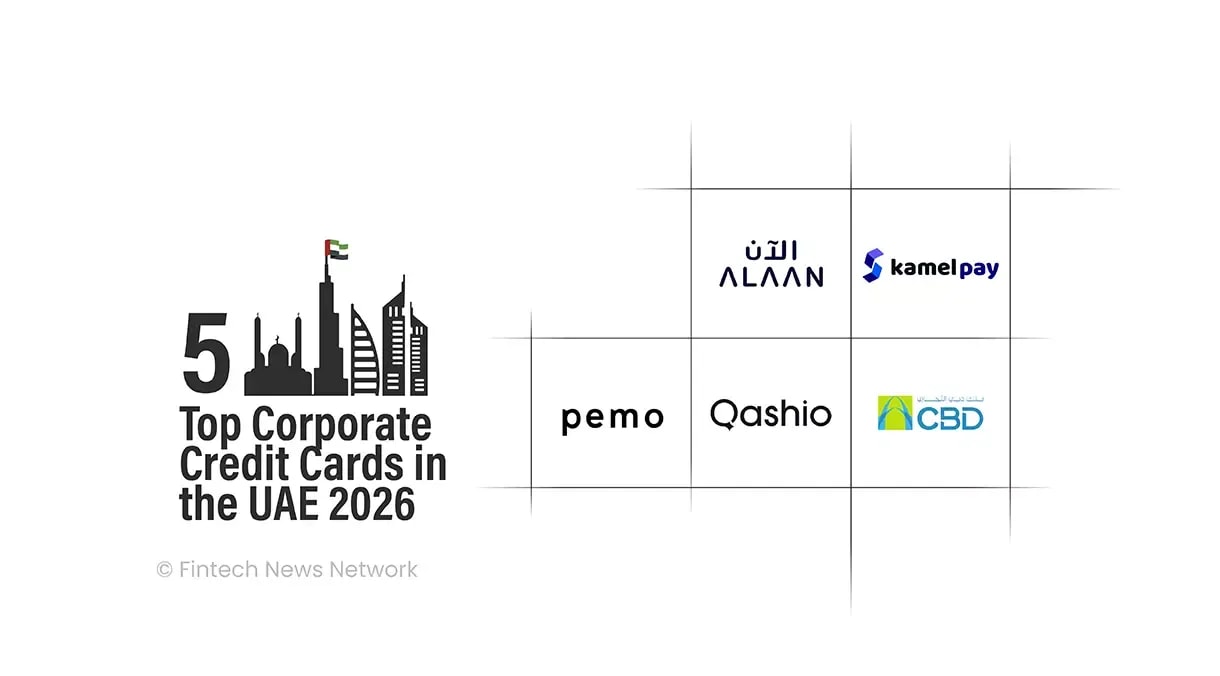
UAE small and medium businesses are digitising the way they pay suppliers and staff. The push comes from two directions: a rising corporate tax burden and an incoming e-invoicing requirement. A standard business credit card no longer meets the needs of most finance teams. They want systems that digitise invoice processing and employee expenses as part of one platform, not a card that simply extends credit.
The Ministry of Finance will require business-to-business e-invoicing in a phased rollout starting in 2027. Federal Decree-Law No. 47 of 2022 has set stricter corporate tax compliance rules in parallel. Manual petty cash processes look increasingly outdated against those obligations. For finance teams, the direction of travel is clear. Spend management platforms have stepped in to automate the workflows that were once handled with petty cash.
The five platforms below are shaping the UAE's B2B payments market in 2026.
Alaan
Best for: SMEs needing international reach and AI accounting automation.
Alaan combines corporate cards, a business bank account and cross-border payments in a single workflow. It is built for SMEs that want international reach and AI-driven accounting. The platform eliminates manual expense reports: AI matches receipts and categorises spending automatically. A partnership with ruya enables transfers to more than 40 countries, a practical feature for regional companies that make international payments regularly.
KamelPay
Best for: Companies with heavy government and P.R.O. expenses.
KamelPay's integrated platform targets companies where government and P.R.O. costs run high. The newly launched AbsoluteCard digitises the cash advances that public relations officers normally receive for visa processing and government fees — spending that often went untracked. Physical and virtual Mastercards can be issued instantly, with budget controls applied in real time.
Pemo
Best for: Startups and local businesses wanting zero setup fees.
Pemo targets startups and local businesses that want zero setup fees. Its physical and virtual corporate cards come with one-click invoice payments, so teams can settle bills without leaving the platform. Early-stage companies get rapid deployment and team management features as standard. A global redemption programme adds local merchant discounts.
Qashio
Best for: Businesses prioritising flexible rewards and employee loyalty.
Qashio pairs corporate cards with automated expense tracking in a single spend management platform. The rewards system is highly customisable. Businesses can earn points and redeem them for Emirates Skywards miles, Shukran points or cashback, which makes the platform easy to align with employee loyalty goals.
Commercial Bank of Dubai
Best for: Early-stage entrepreneurs and newly licensed micro-businesses.
Commercial Bank of Dubai takes a different route, targeting early-stage entrepreneurs and newly licensed micro-businesses through UP by CBD, its dedicated mobile banking app. Fast onboarding is the main draw. The app connects directly to the Dubai Unified License, so completing the digital licensing process produces an instant business credit card.
The current line-up shows where the market is heading. Operational efficiency and automated compliance now shape product design across the region. Finance teams are pairing embedded banking, AI and digital corporate cards to carry the growing administrative load. Cards are no longer standalone products; they have become entry points to broader financial software. This overview was last updated on 5 August 2026.

